

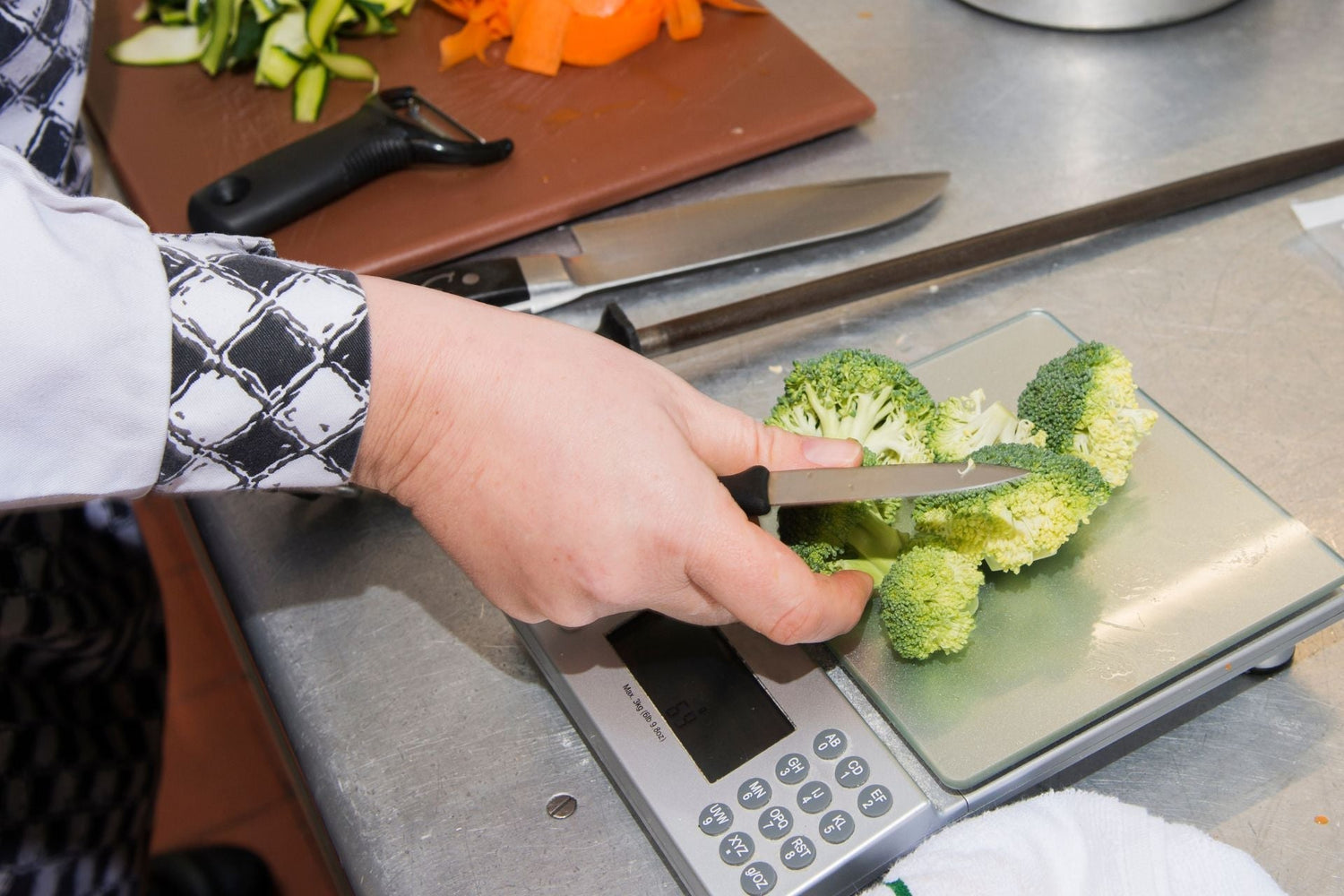
The IP rating on a food industry scale is not a marketing label. It's a precise engineering specification, defined by international standard IEC 60529, that tells you exactly how well the instrument is sealed against the conditions it will face in normal use and during cleaning. Choose the wrong rating for your environment and you're looking at moisture-damaged electronics, failed hygiene audits, and a scale that needs replacing in eighteen months instead of ten years. The numbers aren't complicated once you know what they represent.
How the IP Rating System Works
IP stands for Ingress Protection. Two digits follow the letters, each covering a different type of protection. The first, from 0 to 6, covers solid particles including dust. The second, from 0 to 9, covers liquids. IP65 means fully dust-tight (6) and protected against water jets from any direction (5).
For food production, the first digit is almost always 6. Food dust, flour, spices, and fine powders damage electronics and create contamination risks inside the instrument housing if the seal isn't complete. The second digit is where the meaningful distinction between environments lies.
IP65: The Standard for Most Food Production Settings
IP65 means fully sealed against dust and resistant to low-pressure water jets from any direction. It covers the majority of food preparation, ingredient batching, and light processing environments where the scale is cleaned with a hose or pressure spray at the end of a shift.
The Kern FOB bench scale and the Adam Equipment Aqua ABW range operate at IP65. For a commercial kitchen, bakery, or ingredient preparation area where daily washdown is routine but pressure is moderate, IP65 is the right and cost-effective specification.
Is IP65 Good Enough for Meat Processing or Fish Handling?
In most cases, no. Meat processing, fish handling, abattoirs, and poultry processing environments use more aggressive cleaning regimes. High-pressure jets, frequent temperature changes between product and cleaning water, and exposure to acidic or alkaline cleaning chemicals push IP65 equipment beyond what it's rated for.
IP66 is the minimum for these settings. It covers powerful water jets at any angle, which includes the high-pressure cleaning guns used in professional food processing. The Ohaus Valor 4000 and Valor 7000, along with the Kern SFB and SXC platform scales, operate at IP66 or above.
For environments with floor-level flooding during cleaning, IP67 (protection against temporary immersion to 1 metre for 30 minutes) or IP68 (continuous immersion) becomes the relevant specification. The Adam Gladiator and Ohaus Defender 6000 sit at the heavy end of this range.
Why Stainless Steel Matters as Much as the IP Rating
The IP rating covers the seal. The material specification covers longevity. A scale that's IP65 rated but built with aluminium or plastic components in a food environment will corrode, discolour, and potentially contribute to contamination even if the seal remains intact. Grade 304 or 316 stainless steel is the food industry standard for weighing equipment because it is:
- Non-porous, meaning bacteria cannot embed in micro-abrasions on the surface
- Resistant to the acids, alkalis, and sanitising agents used in food plant cleaning
- Durable enough to withstand scrubbing and heavy cleaning without surface degradation
- Compliant with food safety regulations specifying materials suitable for contact zones
Calibration Requirements in Food Production
In food production, weighing accuracy is a legal and quality compliance requirement. Under Weights and Measures legislation, any scale used in the sale of goods by weight must be trade approved. Under HACCP and BRC frameworks, ingredient weights used in recipe compliance and nutritional labelling must be demonstrably accurate. Neither is optional.
GNW Instrumentation provides calibration services for all IP rated food production scales in the range, with UKAS-traceable certificates available to satisfy audit requirements. Calibration should be performed at installation, after any relocation, and at regular intervals defined by your quality management system.
View our full range of IP rated food production scales from Kern, Ohaus, and Adam Equipment. Calibration certificates available. Contact us today for a product recommendation.

Leave a comment
This site is protected by hCaptcha and the hCaptcha Privacy Policy and Terms of Service apply.