

Product comparison
Choose Your Pressure Gauge
Start with the application, then confirm the pressure range, accuracy, connection, mounting and wetted-material compatibility. These categories overlap - a stainless steel gauge can also be glycerine filled.
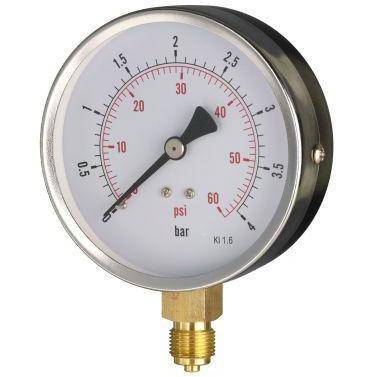
- General-purpose gauges
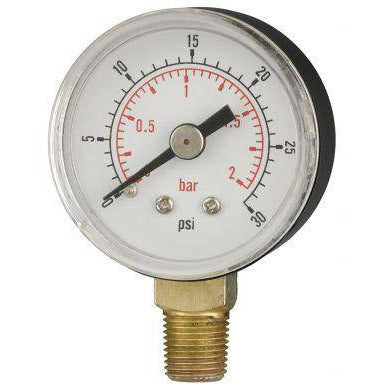
- Routine air and water pressure indication Consider for straightforward installations where the specified wetted materials suit the medium and operating conditions. Check the pressure range, connection thread and mounting position.
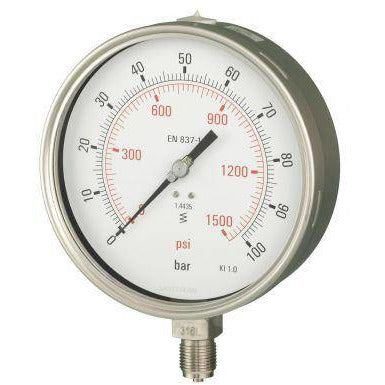
- Industrial pressure gauges
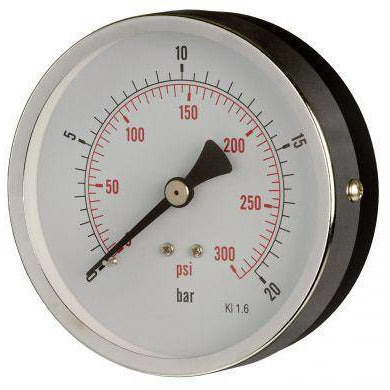
- Local readings on plant and machinery Choose a dry industrial gauge where the pointer stays steady enough to read clearly. If vibration or pressure pulsation makes the pointer flicker, look at the glycerine-filled range.
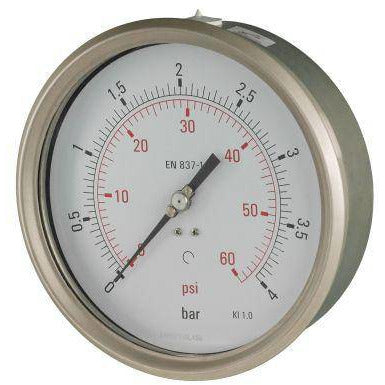
- All stainless-steel gauges
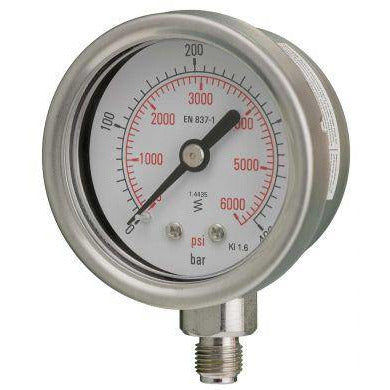
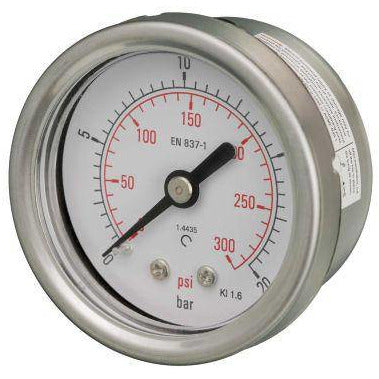
- Applications requiring stainless-steel construction Consider where process-media compatibility or the surrounding environment calls for stainless-steel construction. Confirm the actual wetted materials, seals and temperature limits for the selected model.
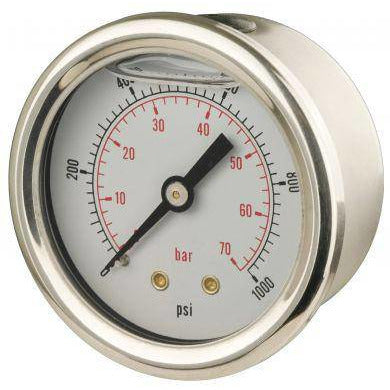
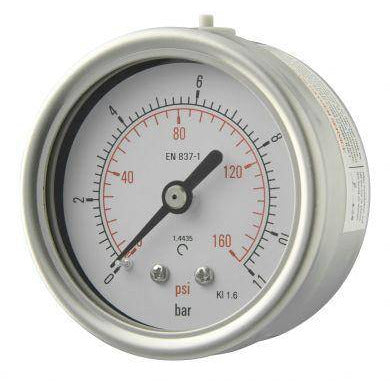
- Glycerine-filled gauges
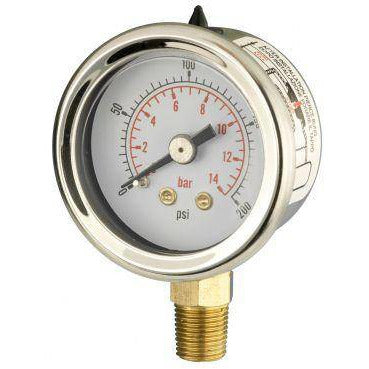
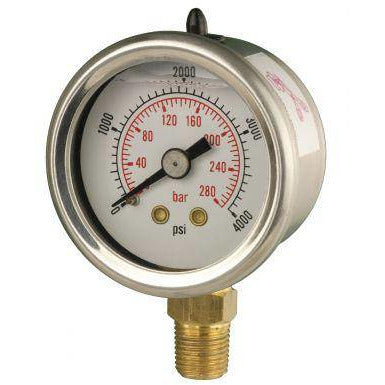
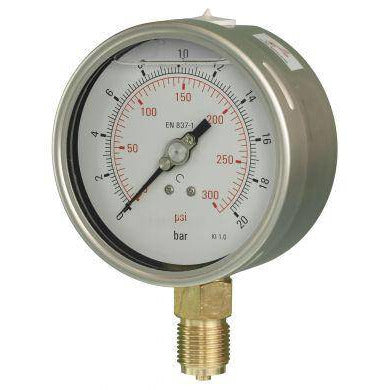
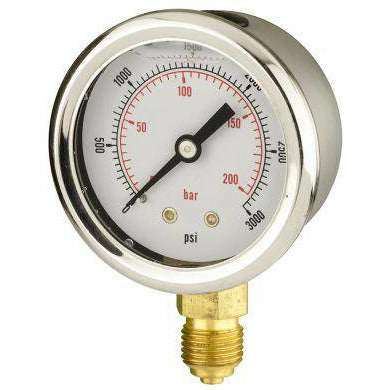
- Installations affected by vibration or pointer movement Consider where vibration or pressure fluctuations make a dry gauge difficult to read. Case filling can damp pointer movement, but severe pulsation may require additional protection. Confirm filling-fluid suitability and temperature limits.
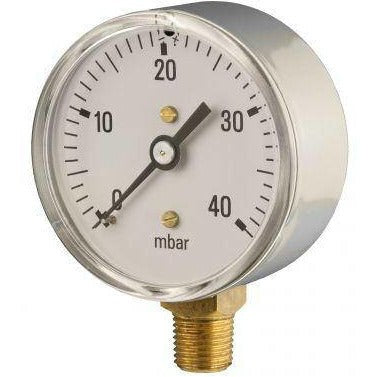
- Low-pressure capsule gauges
- Low-pressure gas measurement Consider for low-pressure applications using gases compatible with the specified capsule and wetted materials. Check the medium, measuring range and permitted operating pressure; do not assume suitability for liquids.
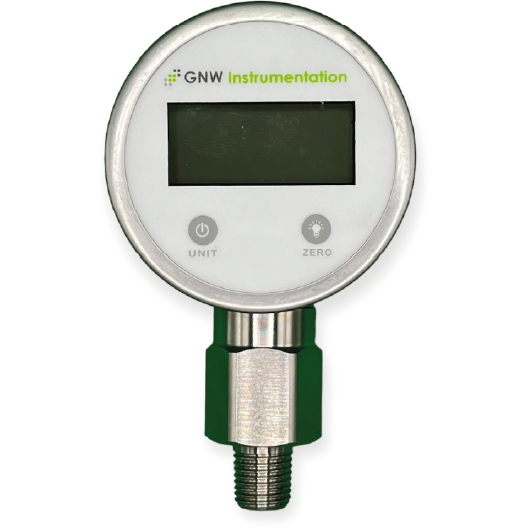
- Digital pressure gauges
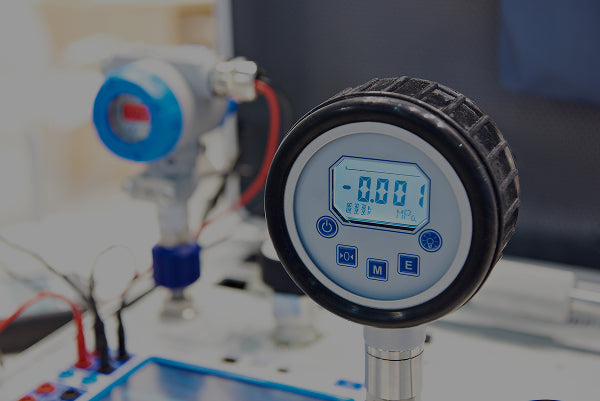
- Testing, maintenance and reference measurements Consider where a numerical display or model-specific functions are useful. Compare stated accuracy separately from display resolution, then confirm gauge, absolute or differential pressure measurement, available ranges and power requirements.
Filters
51 products
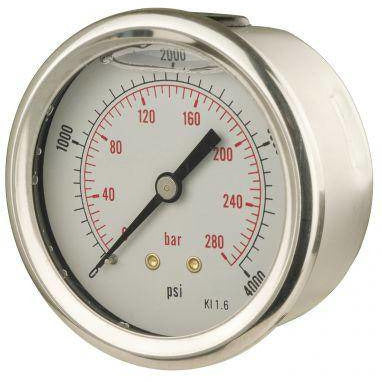
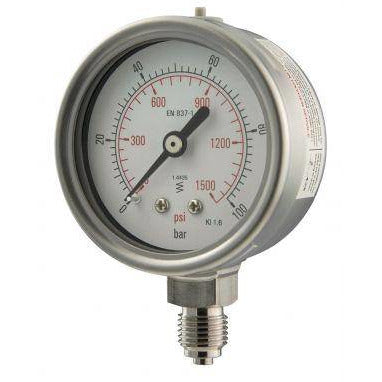
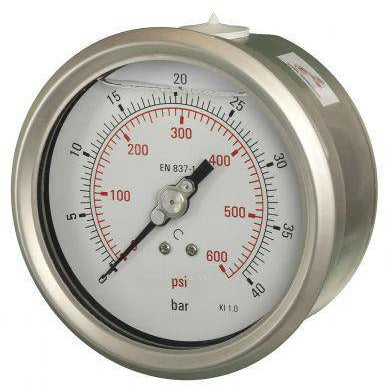
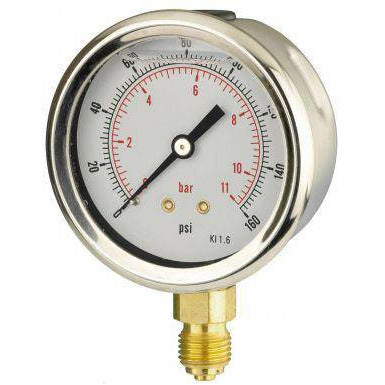
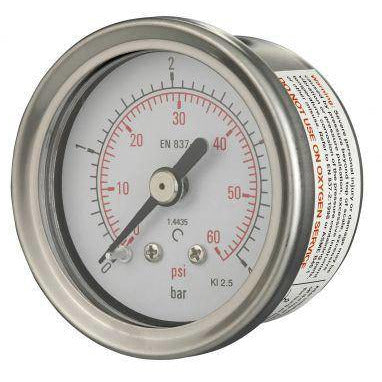
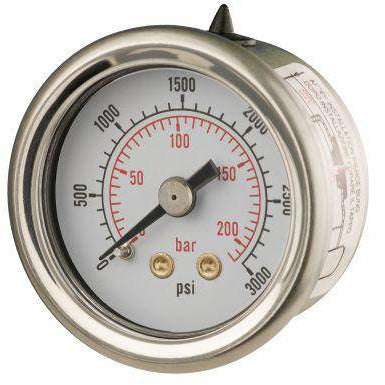
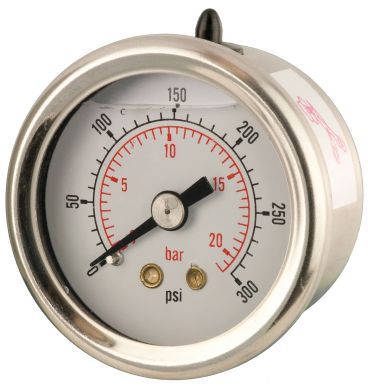
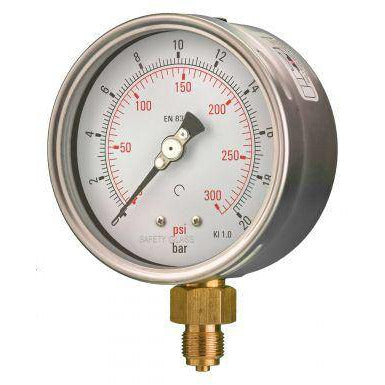
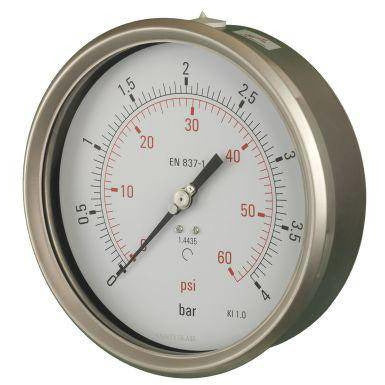
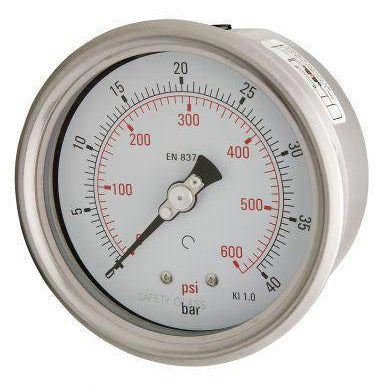


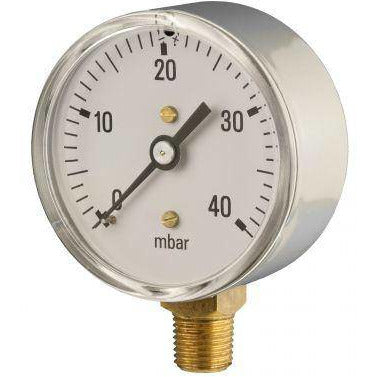

Further Reading
Choosing a pressure gauge you can read with confidence
Reading the scale
Understanding the accuracy figure
Allowing for pressure peaks
Learn more
Pressure gauge applications
What to check on the product page
Calibrated Pressure Gauges
Every gauge in this range can be supplied as a calibrated pressure gauge, ready for your quality records from day one.
Select "Yes" under Calibration Certificate and we check the gauge against traceable reference equipment and issue the certificate ourselves. Our GNW200 digital gauges include a traceable certificate as standard.
We test each gauge against traceable reference equipment, using hydraulic, pneumatic or oil-free methods for oxygen service. Readings are taken rising and falling across the range, so the certificate shows hysteresis as well as error.
Out-of-spec gauges are adjusted where possible before certification.
It identifies the gauge and the reference equipment used, and reports the applied pressures, the gauge's readings and the measurement error at each test point. Test points are chosen to suit the gauge's range.
Yes. We're a family-run business, established in 1974 and based in Southport, and pressure and vacuum gauge calibration is at the heart of what we do.
We calibrate gauges from any manufacturer against traceable test equipment, in our own lab or on site anywhere in the UK, and we're ISO 9001 certificated. See our calibration services.
Pressure gauge FAQs
Does a larger dial or digital display mean better accuracy?
Are BSP, BSPT and NPT pressure gauge connections interchangeable?
Is a stainless steel case enough for corrosive media?
Can I order a pressure gauge calibration certificate?
Blog posts
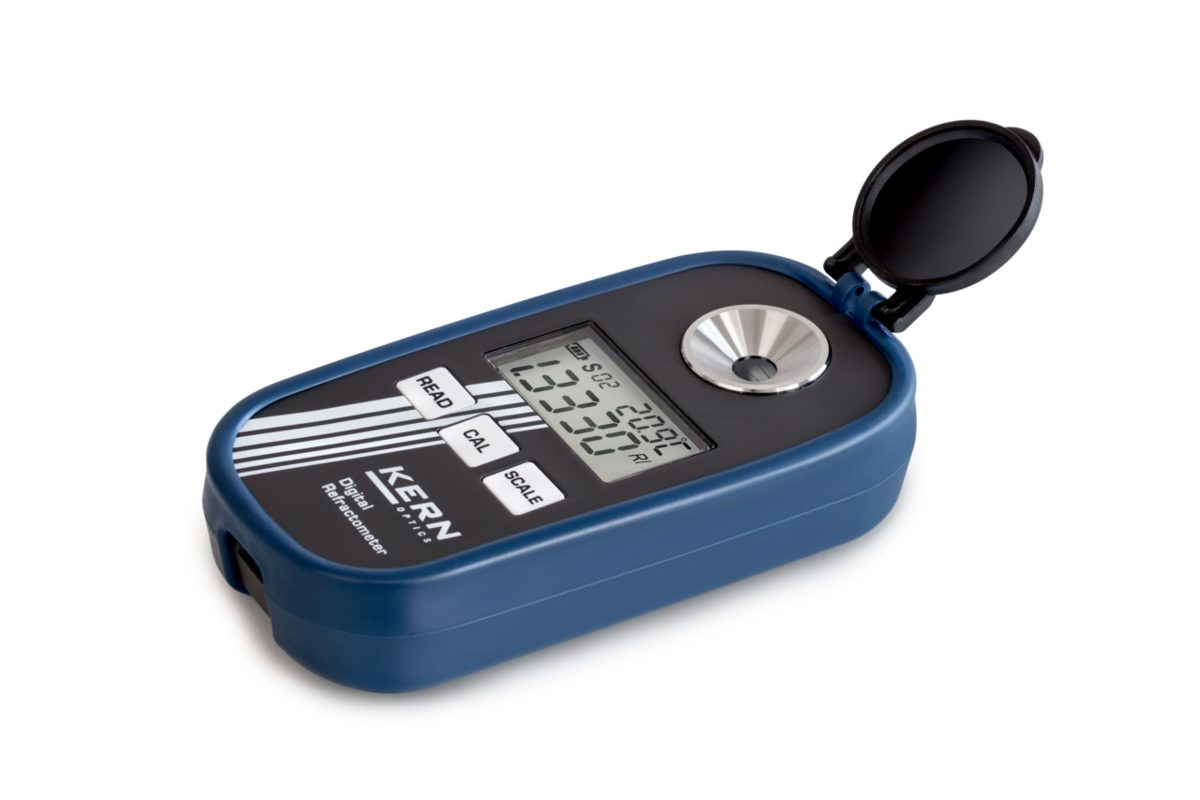
Which Refractometer Do I Need? A Practical Buyer’s Guide
Testing honey, coolant, coffee or brewing wort? Learn which refractometer scales and ranges matter, compare analogue and digital options, and find a suitable Kern model.
Why Is Calibration Important? A Guide to Instrument Calibration
Understand why instrument calibration matters, what a calibration certificate shows, and when traceable or UKAS-accredited calibration may be required.
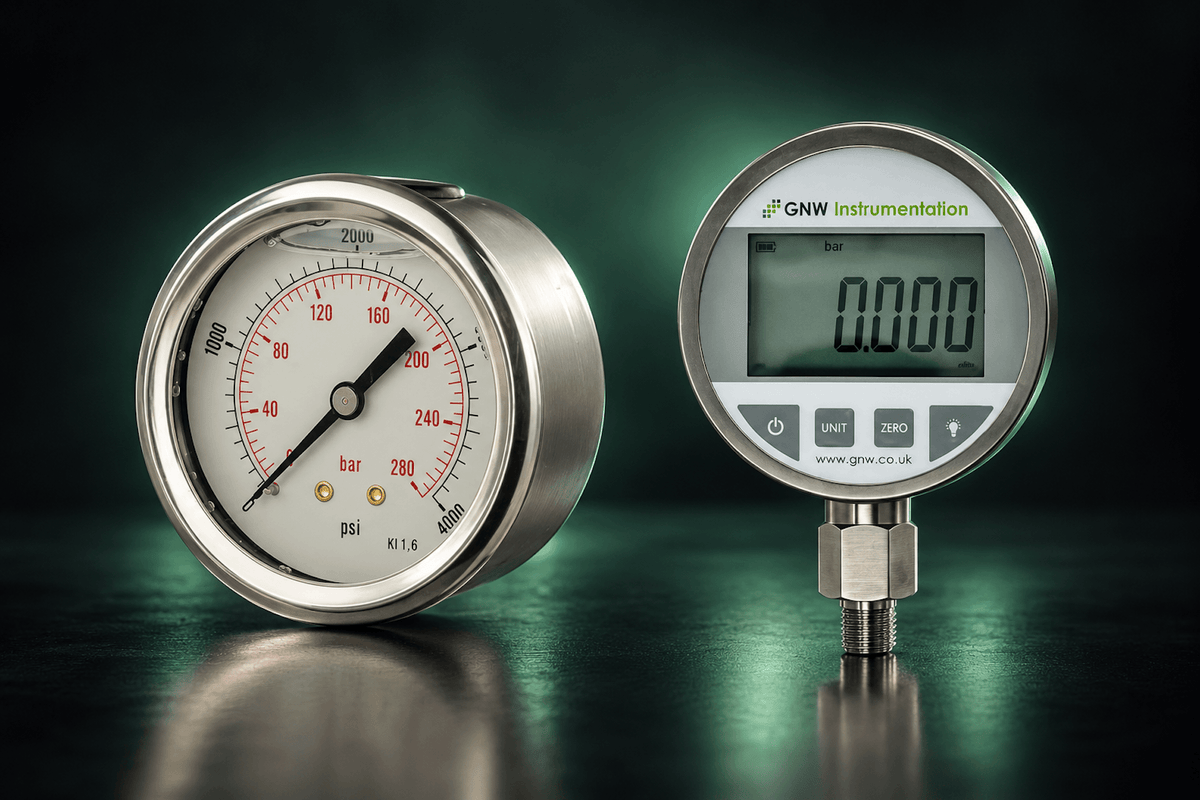
How Accurate Are Digital Pressure Gauges Compared To Analogue
How Accurate Are Digital Pressure Gauges Compared To Analogue A digital pressure gauge looks more accurate before you've checked a single spec. A five digit display reading 4.0237 bar feels more pr...