Price Computing Scales
Price computing scales take the mental arithmetic out of selling goods by weight. Enter the price per kilogram, place the item on the scale, and the display shows the customer exactly what they owe. For retail counters, deli businesses, market traders, farm shops, and any commercial setting where products are sold loose by weight, a price computing scale is not just a convenience, it is a legal requirement under UK trade weighing regulations.
What Does a Price Computing Scale Do?
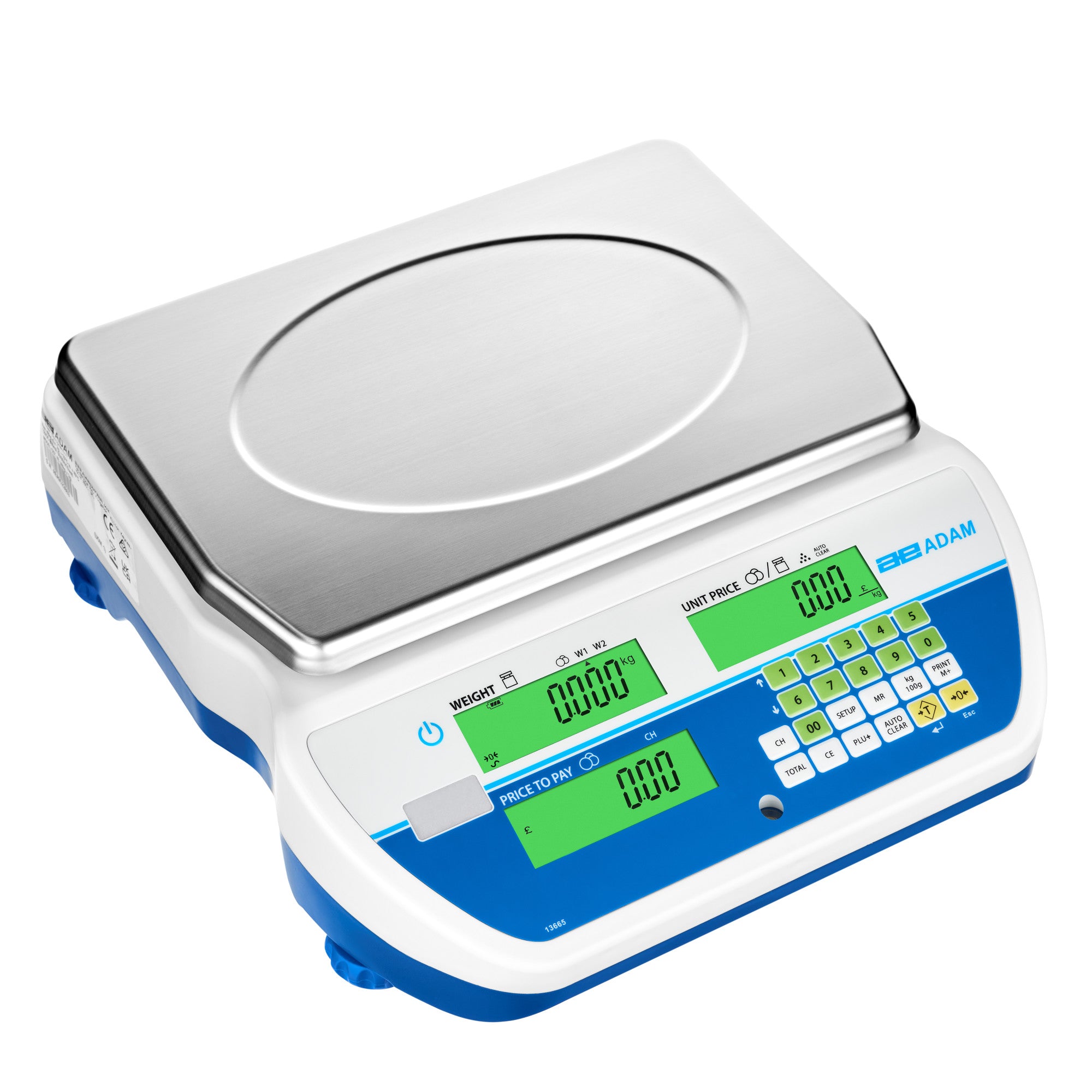
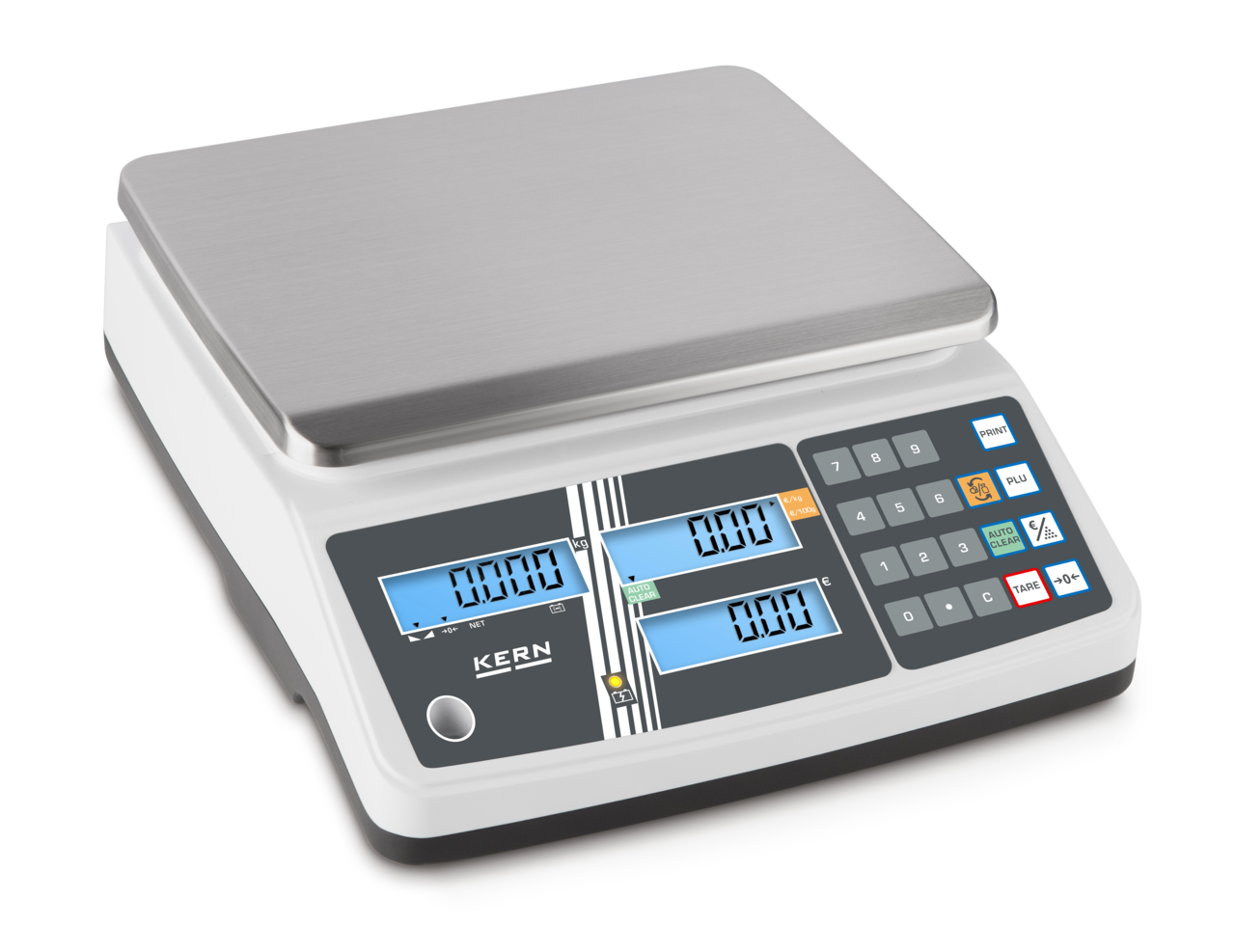
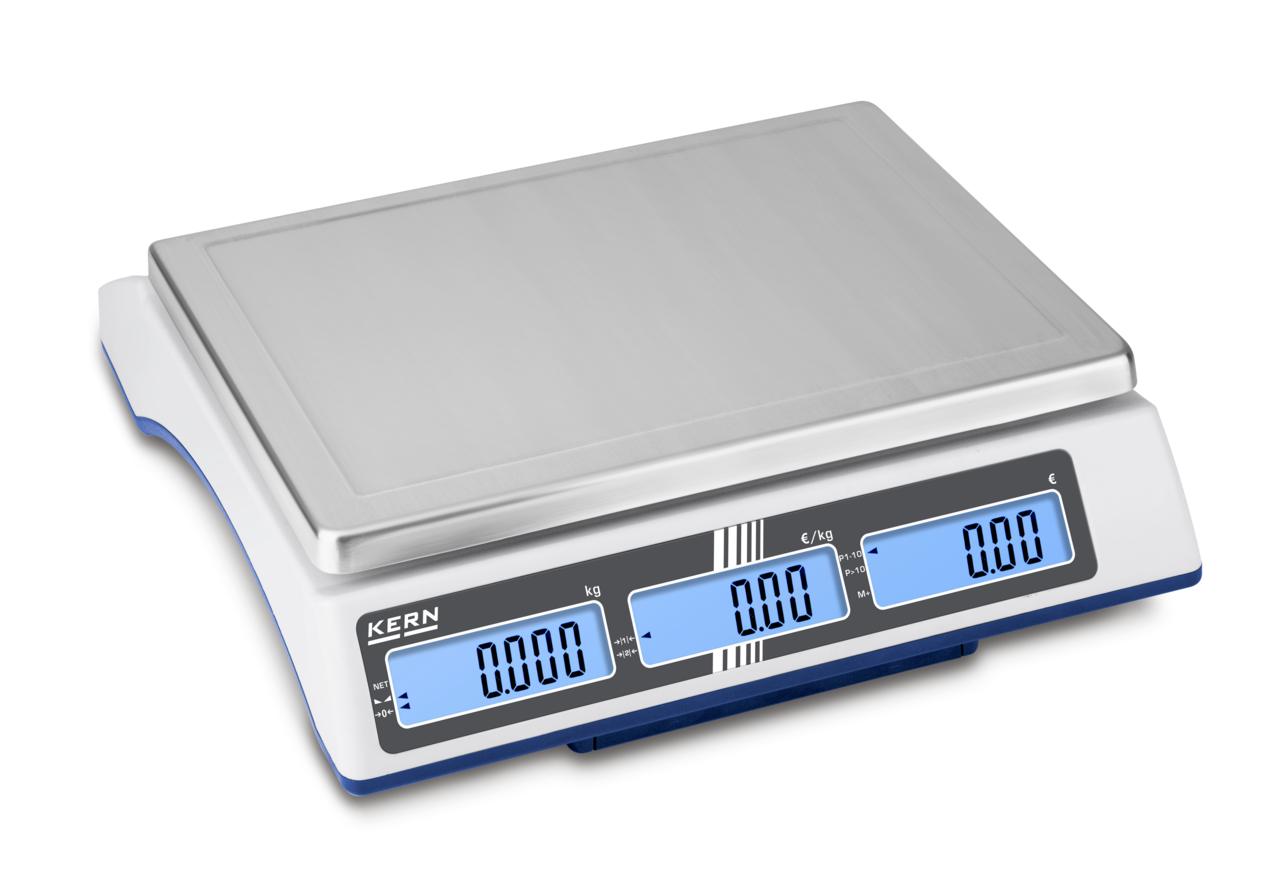
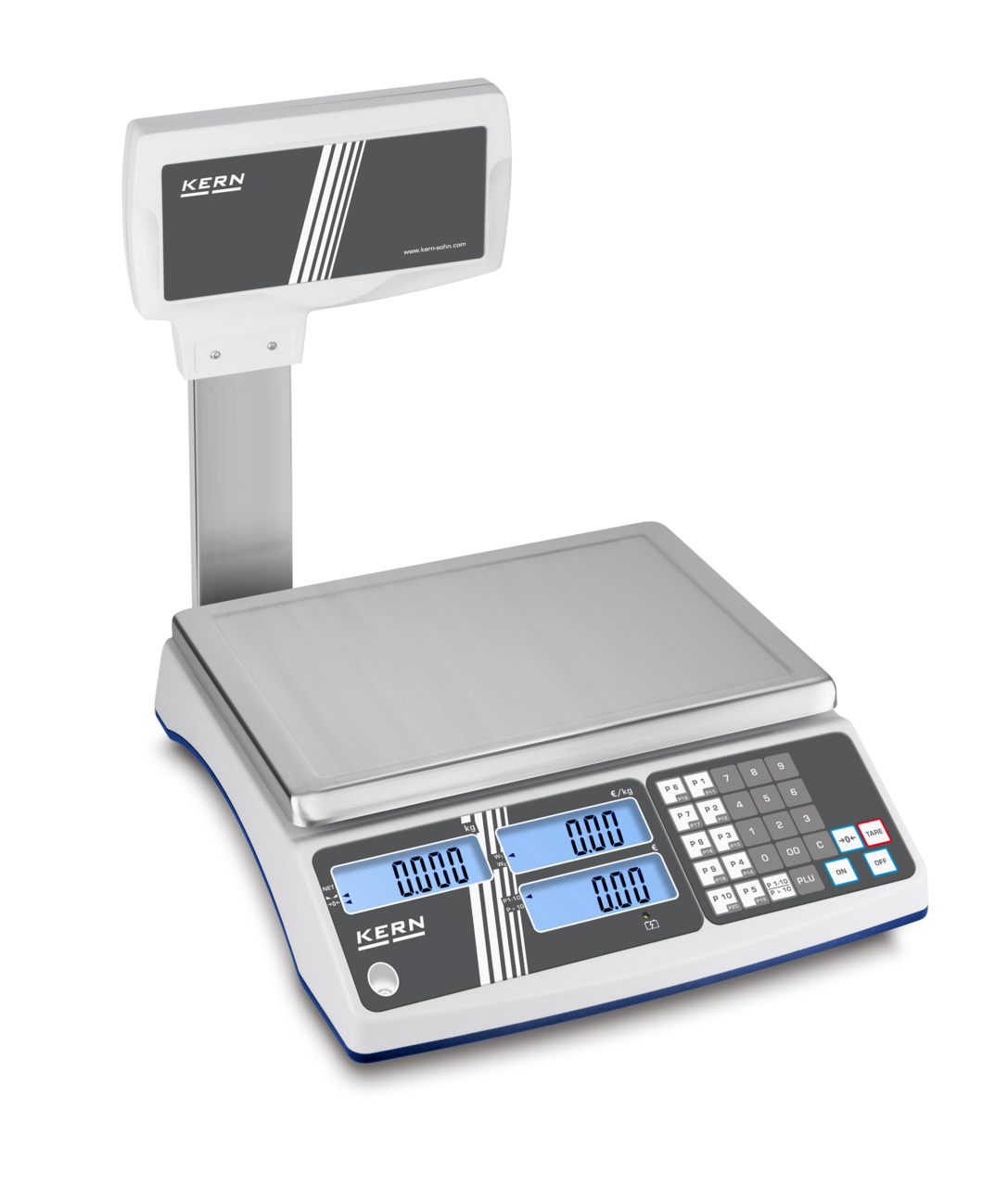
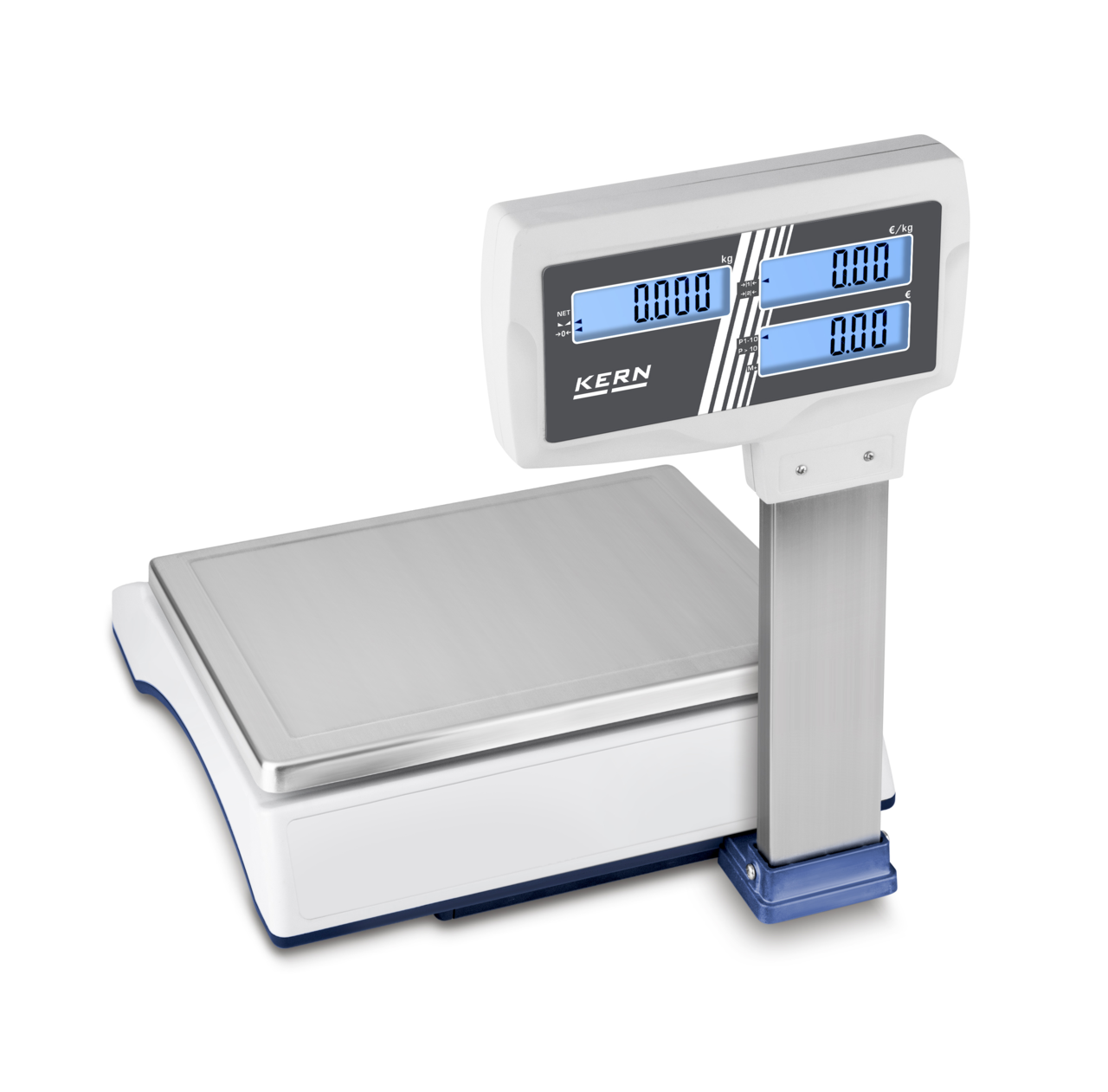
A price computing scale performs three functions simultaneously: it measures the weight of the item, applies the programmed price-per-unit, and calculates the total price to charge. This information is shown on both the operator's display and, on most models, a separate customer-facing display so the buyer can verify the reading. The key advantages over using a separate scale and manual calculation are speed, accuracy, and transparency. Pricing errors are eliminated, transactions move faster, and customers can see the full breakdown of weight, unit price, and total in real time.
Modern price computing scales, including the Kern RIB and Adam Equipment Swift in our range, extend this core function with PLU (Price Look-Up) memory, which stores programmed prices for regularly sold products. This means staff do not need to manually enter the price per kilogram at each transaction. Press the PLU button for the relevant product and the scale retrieves the current price automatically.
Legal-for-Trade Certification Explained
In the UK, any scale used to determine the price paid by a customer must be trade approved under the Non-Automatic Weighing Instruments (NAWI) Regulations. Price computing scales are specifically designed for this use case, and all models in this range carry legal-for-trade certification. The verification mark, a green M stamp with a two-digit year, confirms that the scale has passed independent accuracy testing and meets the requirements of the relevant weighing instruments directive.
Operating a non-approved scale in a price-by-weight transaction is a criminal offence under the Weights and Measures Act 1985. Trading Standards have enforcement powers and do carry out inspections. The legal-for-trade certification on GNW's price computing scales is not a technicality. It is the difference between compliant and non-compliant operation.
Do Price Computing Scales Need Regular Calibration?
Trade-approved scales carry their verification at the point of manufacture and sale, but this does not mean calibration is a one-time event. Under UK regulations, a trade-approved scale that has been repaired, adjusted, or moved in a way that may have affected its metrological performance must be re-verified before it returns to commercial use. Trading Standards can also require re-verification at any time if they have reason to believe accuracy has been compromised.
For practical purposes, a regular calibration check (at least annually in most commercial settings) confirms the scale is performing within its rated accuracy class, gives you a documented record for compliance purposes, and identifies any drift before it becomes a legal or commercial problem. GNW Instrumentation provides calibration services for all price computing scales and can supply UKAS-traceable certificates on request.
Choosing Between Models
The GNW range currently includes two core price computing models covering the primary capacity requirements for retail and food service use.
The Adam Equipment Swift is a compact, practical unit well suited to market stalls, deli counters, and farm shops. It offers the core price computing functions (weight, unit price, total price) with a clear dual display and straightforward PLU programming, at a price point that makes it accessible for small businesses.
The Kern RIB offers a slightly broader feature set including multiple capacity ranges to give operators flexibility for different product types without needing separate scales. Both models carry legal-for-trade approval and are available with a range of capacity and division configurations to match the product weights typically sold.
Can Price Computing Scales Print Labels?
Label printing capability is available on some price computing scale models, though it is not standard on all units. Label-printing scales generate a sticky label showing the product name, weight, unit price, total price, and often a barcode or use-by date. These are widely used in supermarket deli counters, butchers, and food manufacturers who pre-pack products for sale. If label printing is a requirement for your operation, confirm that label printing functionality is included in the specific model you are considering. For operations that do not need labels but do need data output, most models support RS-232 or USB connectivity for logging transactions to a point-of-sale system or spreadsheet. Contact GNW Instrumentation for guidance on which configuration suits your setup.
View our full range of price computing scales from Kern and Adam Equipment. Legal for trade, calibration certificates available, and expert advice on hand from GNW Instrumentation.