Industrial Pressure Gauges for Heavy-Duty Industrial Applications
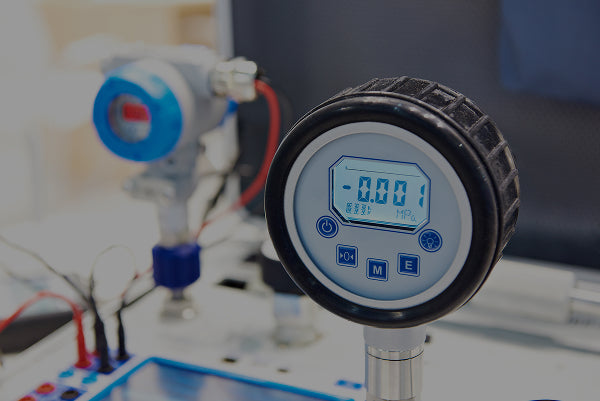
Industrial pressure gauges are widely used throughout manufacturing, process industries, hydraulics, utilities, marine, energy and heavy engineering sectors where standard gauges may not offer sufficient durability or operational stability. Designed for more demanding operating environments, these gauges provide reliable local pressure indication across a broad range of industrial systems and process applications.
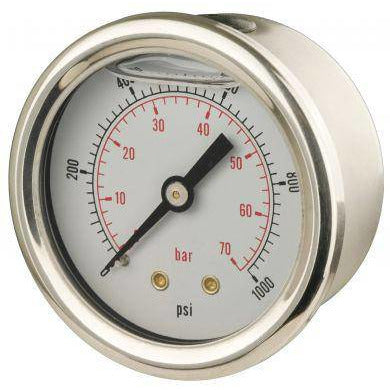
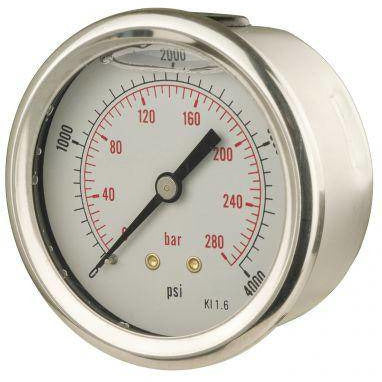
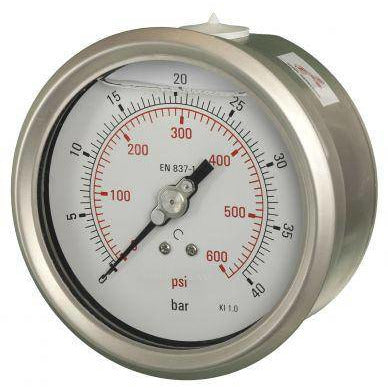
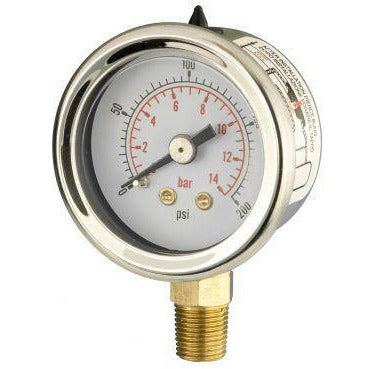
This collection includes industrial pressure gauges manufactured with robust stainless steel cases and industrial-grade Bourdon tube mechanisms suitable for pneumatic, hydraulic, water, steam and compatible process media applications. Many models combine stainless steel external construction with brass wetted parts to provide an effective balance between durability, reliability and cost-effectiveness for general industrial service conditions.
Industrial pressure gauges are commonly selected for systems exposed to vibration, pressure pulsation, fluctuating operating conditions or harsher environmental exposure. Compared with lighter-duty general purpose gauges, industrial gauges are designed to withstand more demanding mechanical and operational stresses while maintaining stable and dependable pressure indication over extended service periods.
Many industrial pressure gauges are available in dry or glycerine filled formats. Glycerine filled gauges are particularly useful where pumps, compressors, hydraulic systems or mobile machinery create vibration or pulsation that may affect pointer stability. The liquid filling dampens movement within the gauge to improve readability while helping reduce wear on the internal mechanism.
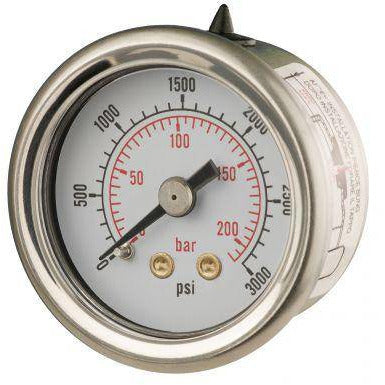
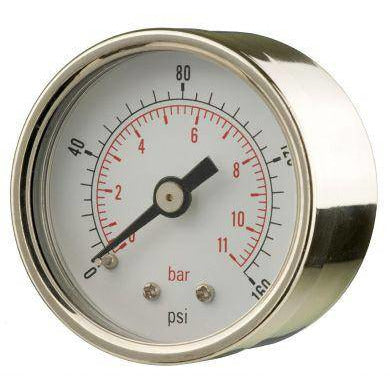
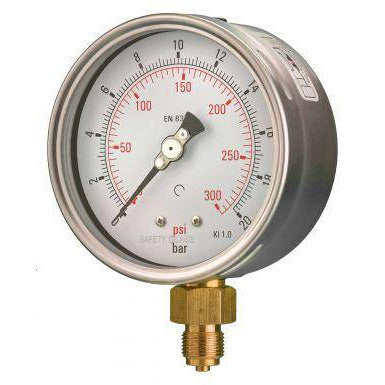
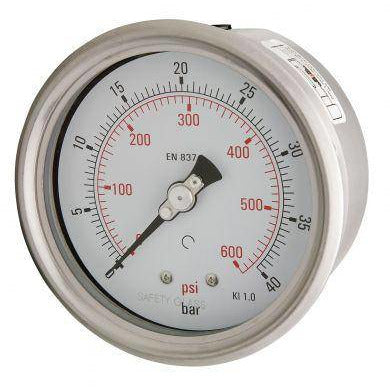
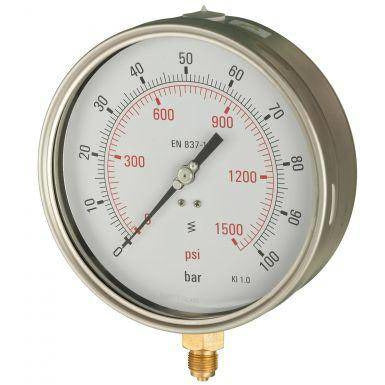
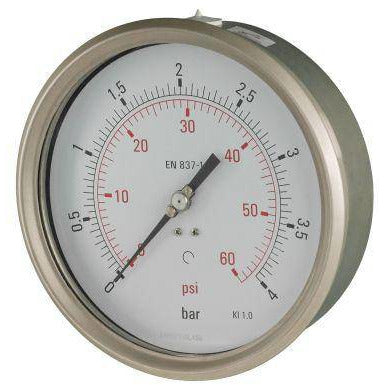
Dial sizes typically range from compact 40mm and 50mm gauges through to larger 100mm and 160mm industrial models where increased visibility is required for plant monitoring and process equipment. Bottom entry and back entry configurations are available to support different installation layouts including direct mounting, panel mounting and surface mounting arrangements.
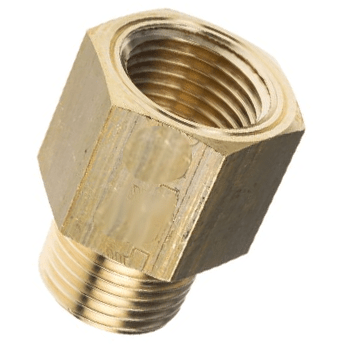
Industrial pressure gauges are widely used on hydraulic power units, compressors, pumps, process skids, industrial pipework, manufacturing machinery and OEM equipment. Standard BSP and NPT process connections are available across a broad range of vacuum, compound and positive pressure scales suitable for both low-pressure and higher-pressure industrial duties.
Many industrial gauges can also be supplied with calibration certification where traceability and documented verification are required as part of preventative maintenance procedures or quality-controlled applications. Regular calibration helps maintain measurement reliability and identify common issues such as span error, zero offset and mechanical wear.
Whether used for OEM manufacture, industrial maintenance or replacement of existing instrumentation, selecting the correct industrial pressure gauge helps improve operational safety, measurement stability and long-term equipment reliability across demanding industrial environments.