

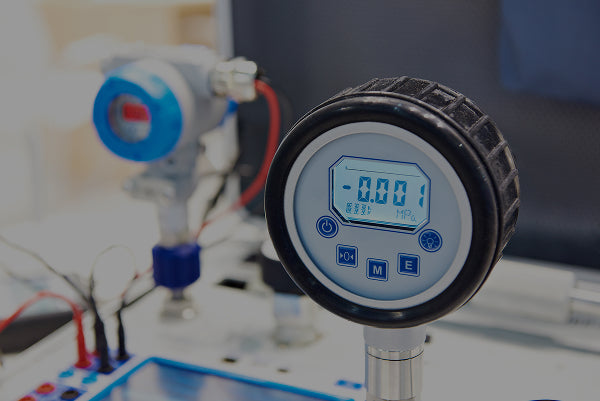

In many industrial environments, pressure gauges are treated as simple indicators — installed, read, and replaced when they fail. But in quality-controlled and safety-critical applications, measurement accuracy matters.
Adding calibration to your pressure gauge purchase provides documented confidence in your readings, improves compliance, and reduces long-term risk.
What Does “Calibration” Actually Mean?
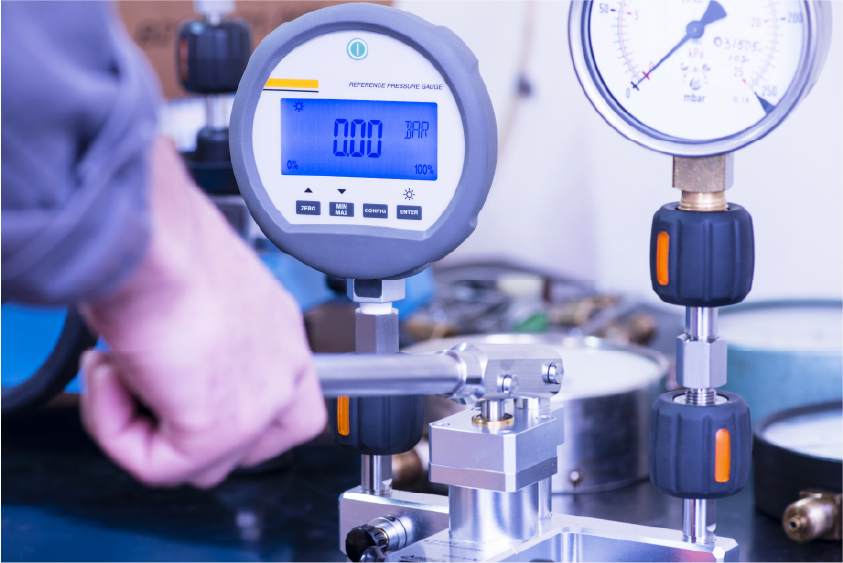
Calibration is the process of comparing a measurement instrument against a known reference standard to verify its accuracy.
For pressure gauges, this typically involves:
- Testing at multiple pressure points
- Comparing readings against a certified reference gauge
- Recording deviation from true value
- Issuing a traceable certificate
The result is documented evidence that the instrument performs within its specified tolerance at the time of testing.
Why Calibration Matters
1. Measurement Confidence
Even new gauges can have slight deviations from their nominal accuracy class. Calibration confirms that your gauge performs within tolerance before installation.
For engineering and maintenance teams, this provides confidence that system readings reflect real operating conditions.
2. ISO 9001 & Quality Compliance
For organisations operating under ISO 9001 or similar quality systems, measurement equipment used for product conformity must be controlled.
Calibration provides:
- Traceability to national standards
- Documented verification records
- Clear identification of calibration status
- Support during audits
Without calibration, demonstrating measurement reliability becomes difficult.
3. Reduced Operational Risk
Inaccurate pressure readings can lead to:
- Improper system adjustments
- Undetected overpressure conditions
- Inefficient operation
- Component stress or premature failure
Calibrated gauges reduce the risk of relying on incorrect data.
4. Financial Protection
A small error in pressure measurement can create disproportionate operational impact.
Calibration helps protect:
- Equipment integrity
- Production continuity
- Maintenance efficiency
- Regulatory compliance
The cost of calibration is typically small compared to the cost of incorrect measurement.
When Should You Add Calibration?
Calibration is particularly recommended when:
- The gauge is used for product quality verification
- Pressure affects safety or compliance
- The gauge is part of a test bench or calibration system
- You are operating under ISO 9001 or regulated standards
- Accurate pressure control directly affects process outcomes
For non-critical monitoring applications, calibration may be optional. For verification and compliance roles, it is strongly recommended.
Traceable vs UKAS Calibration
It’s important to understand the difference:
Traceable Calibration
- Compared against calibrated reference equipment
- Traceable to national standards
- Suitable for many internal quality systems
UKAS Calibration
- Performed under accredited laboratory conditions
- Required where specified by contract or regulation
- Provides higher formal assurance
Selecting the correct level depends on your application and compliance requirements.
Calibration as Part of a Structured Approach
Many businesses now combine:
- Calibrated working gauges
- In-house verification systems
- Formal external calibration intervals
This structured approach improves internal capability while maintaining compliance.
Adding calibration at the point of purchase ensures your instrument is ready for controlled service from day one.
GNW Calibration Services
At GNW Instrumentation, we supply pressure gauges and calibration systems with optional:
- Traceable calibration certificates
- UKAS calibration (where required)
- In-house calibration support
- Recalibration reminder services
Our equipment is specified and supported by calibration engineers who understand real-world workshop and industrial requirements.
Final Thought
Calibration is not just about paperwork — it is about confidence in measurement.
When pressure readings influence safety, quality, or performance, verified accuracy matters.
If you are unsure whether calibration is appropriate for your application, our team can provide practical guidance based on your industry and operating requirements.



Leave a comment
This site is protected by hCaptcha and the hCaptcha Privacy Policy and Terms of Service apply.