
Why Add Calibration to Your Pressure Gauges?

In many industrial environments, pressure gauges are treated as simple indicators — installed, read, and replaced when they fail. But in quality-controlled and safety-critical applications, measurement accuracy matters.

Adding calibration to your pressure gauge purchase provides documented confidence in your readings, improves compliance, and reduces long-term risk.


What Does “Calibration” Actually Mean?

Calibration is the process of comparing a measurement instrument against a known reference standard to verify its accuracy.

For pressure gauges, this typically involves:

  • Testing at multiple pressure points
  • Comparing readings against a certified reference gauge
  • Recording deviation from true value
  • Issuing a traceable certificate

The result is documented evidence that the instrument performs within its specified tolerance at the time of testing.


Why Calibration Matters

1. Measurement Confidence

Even new gauges can have slight deviations from their nominal accuracy class. Calibration confirms that your gauge performs within tolerance before installation.

For engineering and maintenance teams, this provides confidence that system readings reflect real operating conditions.


2. ISO 9001 & Quality Compliance

For organisations operating under ISO 9001 or similar quality systems, measurement equipment used for product conformity must be controlled.

Calibration provides:

  • Traceability to national standards
  • Documented verification records
  • Clear identification of calibration status
  • Support during audits

Without calibration, demonstrating measurement reliability becomes difficult.


3. Reduced Operational Risk

Inaccurate pressure readings can lead to:

  • Improper system adjustments
  • Undetected overpressure conditions
  • Inefficient operation
  • Component stress or premature failure

Calibrated gauges reduce the risk of relying on incorrect data.


4. Financial Protection

A small error in pressure measurement can create disproportionate operational impact.

Calibration helps protect:

  • Equipment integrity
  • Production continuity
  • Maintenance efficiency
  • Regulatory compliance

The cost of calibration is typically small compared to the cost of incorrect measurement.


When Should You Add Calibration?

Calibration is particularly recommended when:

  • The gauge is used for product quality verification
  • Pressure affects safety or compliance
  • The gauge is part of a test bench or calibration system
  • You are operating under ISO 9001 or regulated standards
  • Accurate pressure control directly affects process outcomes

For non-critical monitoring applications, calibration may be optional. For verification and compliance roles, it is strongly recommended.


Traceable vs UKAS Calibration

It’s important to understand the difference:

Traceable Calibration

  • Compared against calibrated reference equipment
  • Traceable to national standards
  • Suitable for many internal quality systems

UKAS Calibration

  • Performed under accredited laboratory conditions
  • Required where specified by contract or regulation
  • Provides higher formal assurance

Selecting the correct level depends on your application and compliance requirements.


Calibration as Part of a Structured Approach

Many businesses now combine:

  • Calibrated working gauges
  • In-house verification systems
  • Formal external calibration intervals

This structured approach improves internal capability while maintaining compliance.

Adding calibration at the point of purchase ensures your instrument is ready for controlled service from day one.


GNW Calibration Services

At GNW Instrumentation, we supply pressure gauges and calibration systems with optional:

  • Traceable calibration certificates
  • UKAS calibration (where required)
  • In-house calibration support
  • Recalibration reminder services

Our equipment is specified and supported by calibration engineers who understand real-world workshop and industrial requirements.


Final Thought

Calibration is not just about paperwork — it is about confidence in measurement.

When pressure readings influence safety, quality, or performance, verified accuracy matters.

If you are unsure whether calibration is appropriate for your application, our team can provide practical guidance based on your industry and operating requirements.

How Does a Pressure Gauge Work?

Pressure gauges are mechanics used widely across manufacturing, chemical processing, HVAC, and water treatment corporations. Their purpose is to provide a pressure-sensitive reading of a gas or liquid in an industrial setting. Pressure gauges play a significant operational role as many industrial systems rely on the precision of their readings.

Without pressure gauges, fluid powered machines would face unpredictable failures. By implementing one into your machinery, you can monitor pressure around the clock, with any cause for concern flagged immediately, avoiding dangerous or costly errors.

This blog will discuss the workings of a pressure gauge and the importance of their role in an industrial setting, namely their functionality and safety.

How does a pressure gauge measure pressure?

Inside a pressure gauge is a pressure-sensitive mechanism that’s measured internally with the results displayed via a dial or digital readout. The pressure sensitivity is measured as the mechanism deforms under the pressure of the gas or liquid, this is then converted into a reading through measurement, to be displayed to the user. The concept of a pressure gauge is built upon the principle of Hooke’s Law, which states that the amount of force applied to a spring is equal to the returned force of resistance the spring gives back, i.e. if you pull on a spring, it will pull back with equal force.

When considering this law with a pressure gauge in mind, a pressure gauge is measuring the pressure of said media (a liquid or gas), when the pressure fluctuates, the mechanism changes and the change in pressure can be read on the dial or digital readout of the pressure gauge.

This principle applies to all pressure gauges, the full range can be explored at the GNWShop.

How do mechanical and digital pressure gauges differ in functionality?

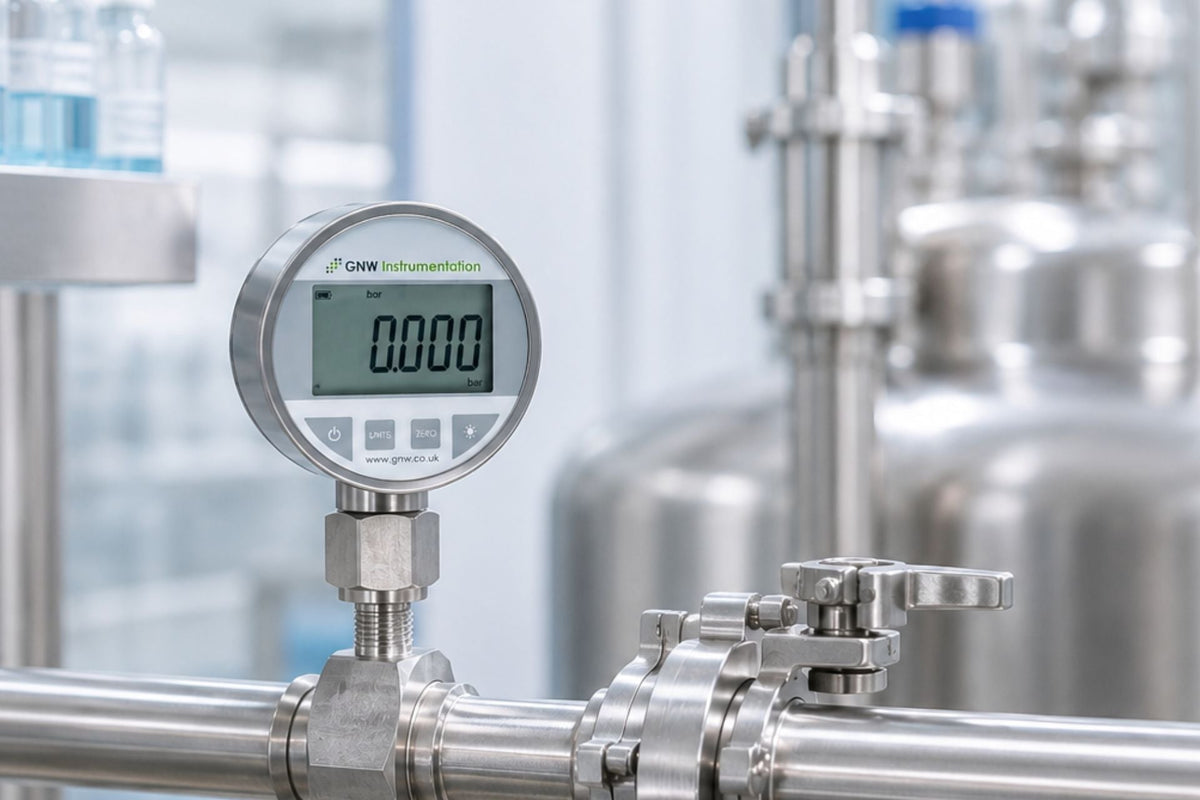
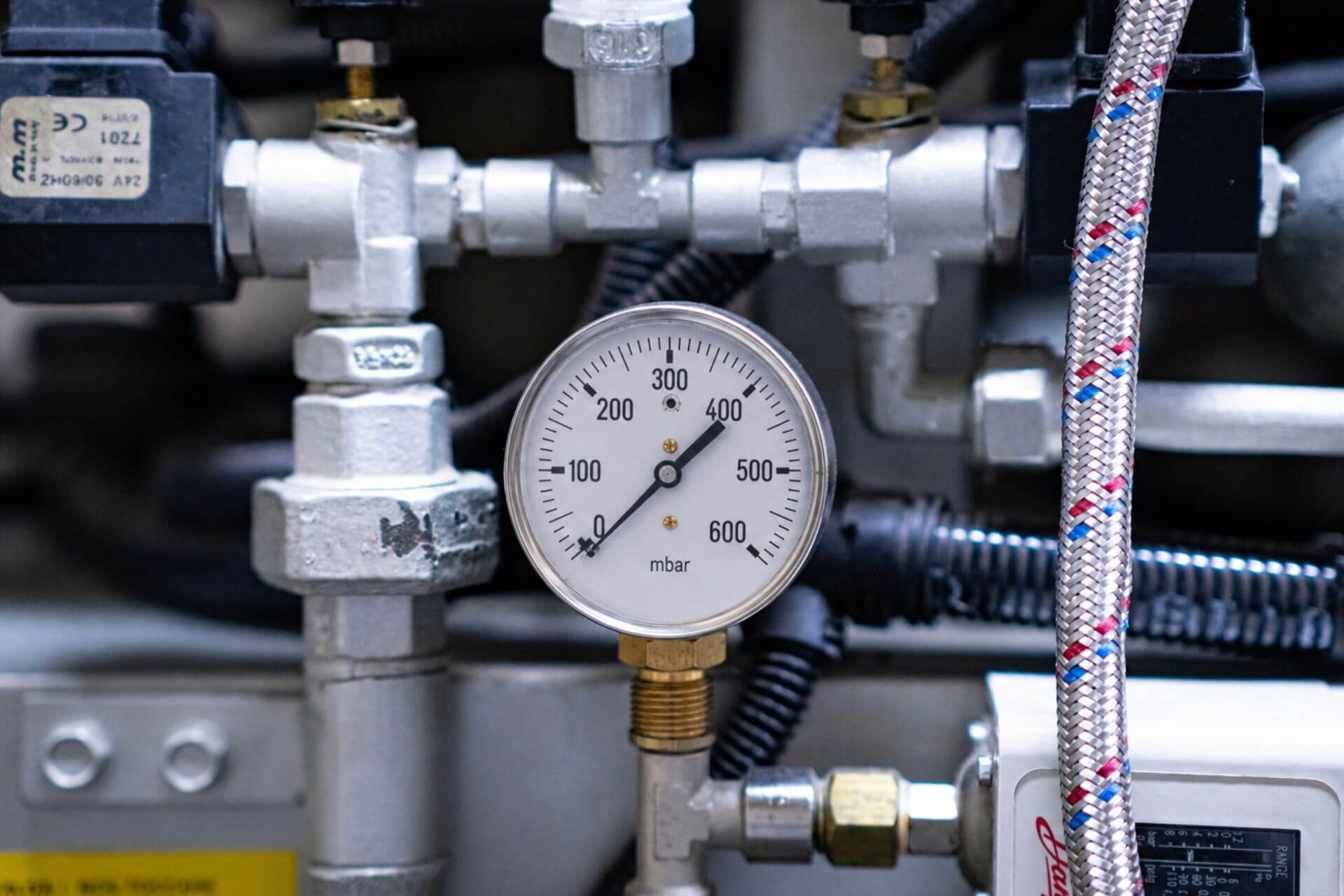
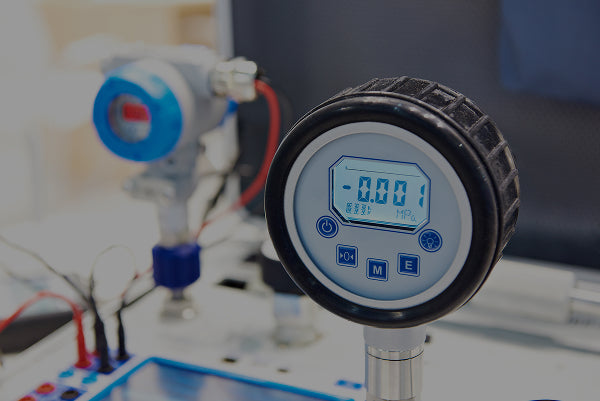
Mechanical pressure gauges are often referred to as analogue gauges. The function of this type of pressure gauge is based around the mechanical movement of a bourdon tube, or in some designs a diaphragm seal, which in turn drives a needle around a dial. A digital pressure gauge differs by using a diaphragm and strain gauge as opposed to a bourdon tube or diaphragm seal. The digital displays allow the pressure gauge to display and record readings with more ease.

Whilst mechanical pressure gauges can be more affordable compared to digital gauges, and don’t rely on a power supply, digital pressure gauges remain calibrated for far longer, the importance of which can be read about here. They also perform well in areas of extreme vibration, pulsation, and corrosion and display a clear reading, with some models having the option of a backlight.

What role does pressure play in efficiency and safety?

Pressure gauges are implemented in industrial settings to act as a constant monitor to pressure sensitive systems. By having constant access to precise pressure readings, the role of the pressure gauge works to prevent hazardous conditions. By recording any changes in pressure, problems can be dealt with rapidly to avoid any potential issues before they escalate. Further to this, pressure gauges are incredibly user friendly mechanisms, meaning room for error is near to non-existent, allowing for universally readable results.

Not only do pressure gauges play an important role in maintaining a safe industrial setting, but one that works efficiently too. The monitoring of pressure levels means that systems can operate at their optimum, this serves organisations as they’re able to keep any energy wastage to a minimum and regulate performance standards, keeping them maintainable. More about the importance of keeping a safe measure on pressure systems and the role calibration plays can be found here.

How does the type of pressure gauge impact its function and application?

A library of pressure gauges exists due to the variation in requirements from different industries. An example of the comparison between mechanical and digital pressure gauges mentioned earlier in the blog is that digital gauges often provide higher accuracy and work best in a lab setting, however mechanical gauges are sufficient for general industrial use. It’s important to consider the environment your pressure gauge is going to be operating in, as well as the media pressure being measured.

Each pressure gauge is designed with a specific pressure range in mind, for example bourdon tube gauges are suitable for medium to high pressure, whilst diaphragm gauges are ideal for low pressure applications. To ensure you’re getting the most accurate reading and your pressure gauge is running at the highest efficiency, it’s crucial that you select the right gauge for the level of pressure being measured.

When it comes to application, there are specific features to bear in mind. For industries that require a sanitary environment, diaphragm seal pressure gauges are ideal for systems dealing with food, pharmaceuticals, or chemicals. For more hazardous environments, intrinsically safe digital gauges are the best approach. At GNW, we supply a wide range of pressure gauges with a team of experts to advise you on the most suitable mechanism for your pressure monitoring systems. For guidance regarding the different types of pressure gauges, read our blog that breaks down everything you need to know.

The Right Pressure Gauge For You

You should now have a rough understanding of the important role a pressure gauge plays in pressure monitoring systems, and how this can transform your mechanical operations. It’s vital that you choose the right gauge to work most efficiently across your systems, at GNW our technicians are on hand to answer any questions you might have in your search for your next pressure gauge. For any questions you have, get in touch with our team here.


If you’re ready to take the next step and implement a pressure gauge to transform your operations, browse our full range online now.

Different Types Of Pressure Gauges

Pressure gauges are often a standard regulation across many industries; that's why GNW offers a diverse product range. This article will take a closer look into the types of pressure gauges we have available and which one is the right choice for your business

Advantages of Glycerine-Filled Pressure Gauges: Improving Accuracy and Durability

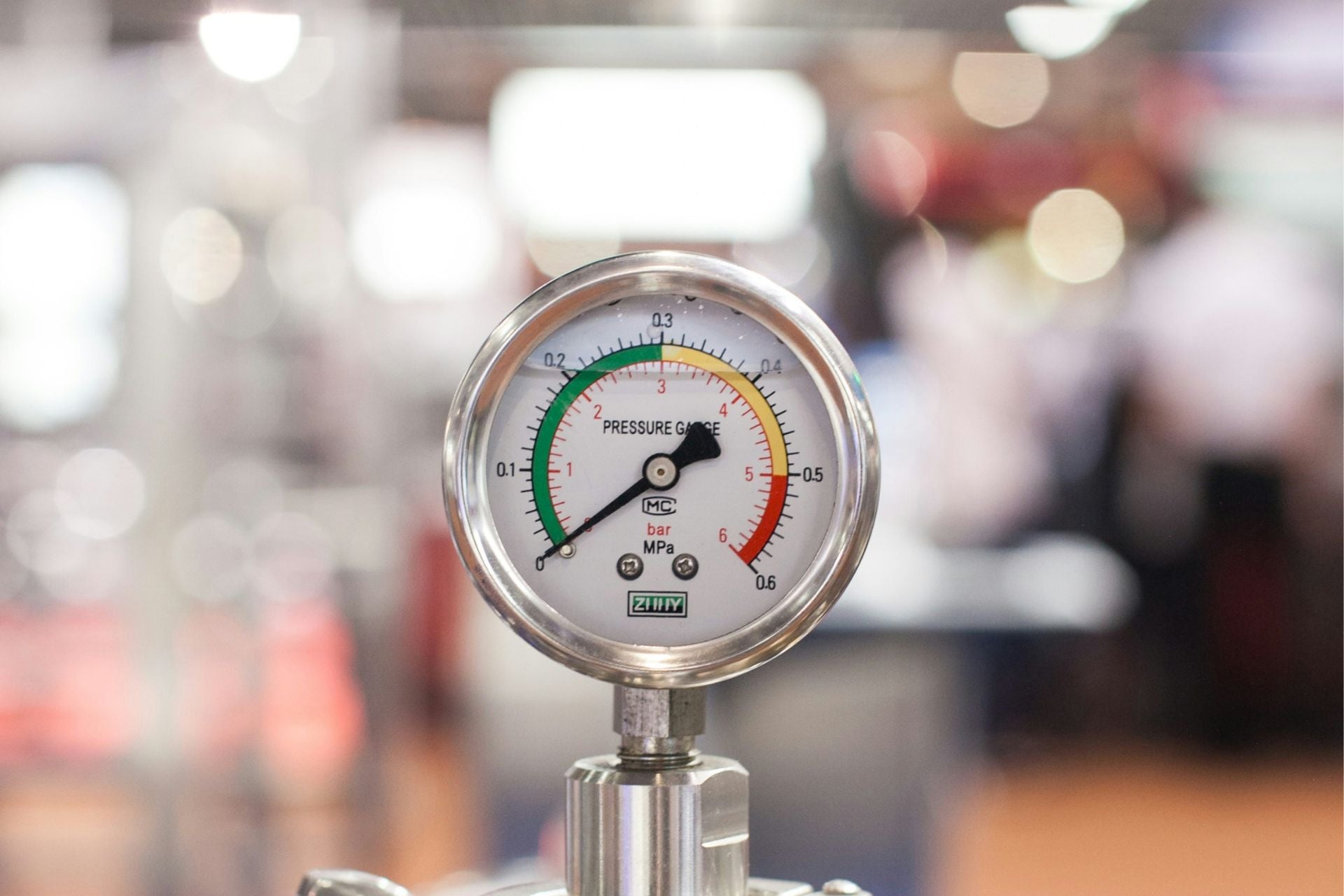
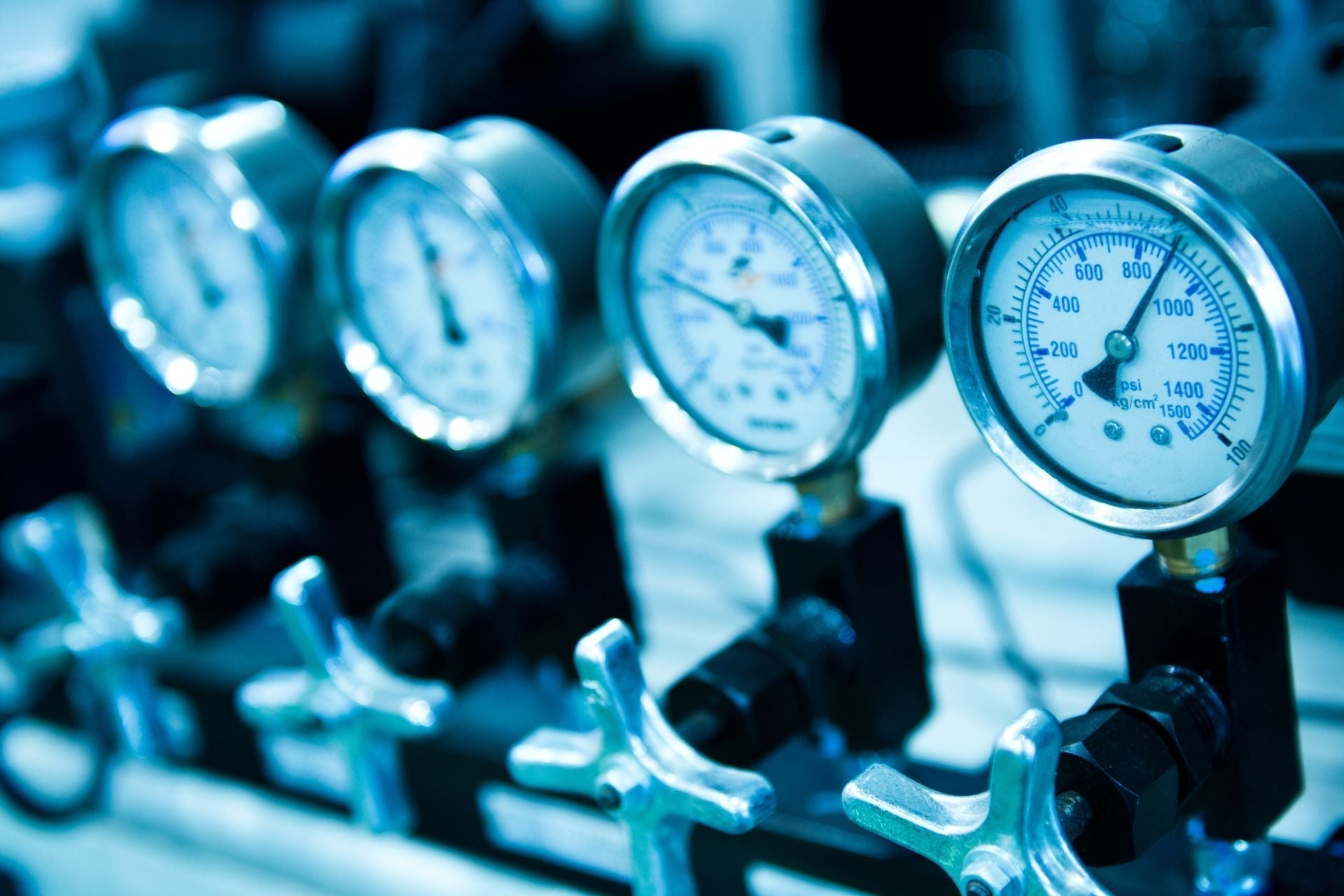
Glycerine-filled pressure gauges are a popular choice for a wide range of applications due to their ability to dampen the effects of pulsation and vibration. In this post, we'll take a closer look at glycerine-filled pressure gauges and their advantages.

What are glycerine-filled pressure gauges? Glycerine-filled pressure gauges are pressure gauges that have their internal cavities filled with glycerine, a clear, odorless, and non-toxic liquid. The glycerine acts as a dampening fluid, reducing the effects of pulsation and vibration on the gauge pointer. This helps to extend the lifespan of the gauge and provides more accurate readings over time.

Advantages of glycerine-filled pressure gauges There are several advantages to using glycerine-filled pressure gauges:

  1. Vibration and pulsation dampening: As mentioned earlier, the glycerine-filled cavity helps to reduce the effects of vibration and pulsation on the gauge pointer, leading to more accurate readings and longer lifespan of the gauge.

  2. Corrosion protection: Glycerine has anti-corrosive properties, which means that it can help to protect the internal components of the gauge from corrosion caused by exposure to harsh or corrosive substances.

  3. Improved readability: The dampening effect of glycerine helps to prevent the gauge pointer from oscillating wildly, making it easier to read and interpret the pressure readings.

  4. Versatility: Glycerine-filled pressure gauges are suitable for a wide range of applications, including industrial, commercial, and residential settings.

  5. Durability: Glycerine-filled pressure gauges are designed to withstand harsh environmental conditions, making them ideal for use in rugged environments.

Conclusion Glycerine-filled pressure gauges offer several advantages over traditional pressure gauges, including improved accuracy, durability, and corrosion resistance. If you're looking for a reliable pressure gauge that can provide accurate readings even in harsh environments, consider investing in a glycerine-filled pressure gauge.

Click here to view our range of glycerine-filled pressure gauges.