





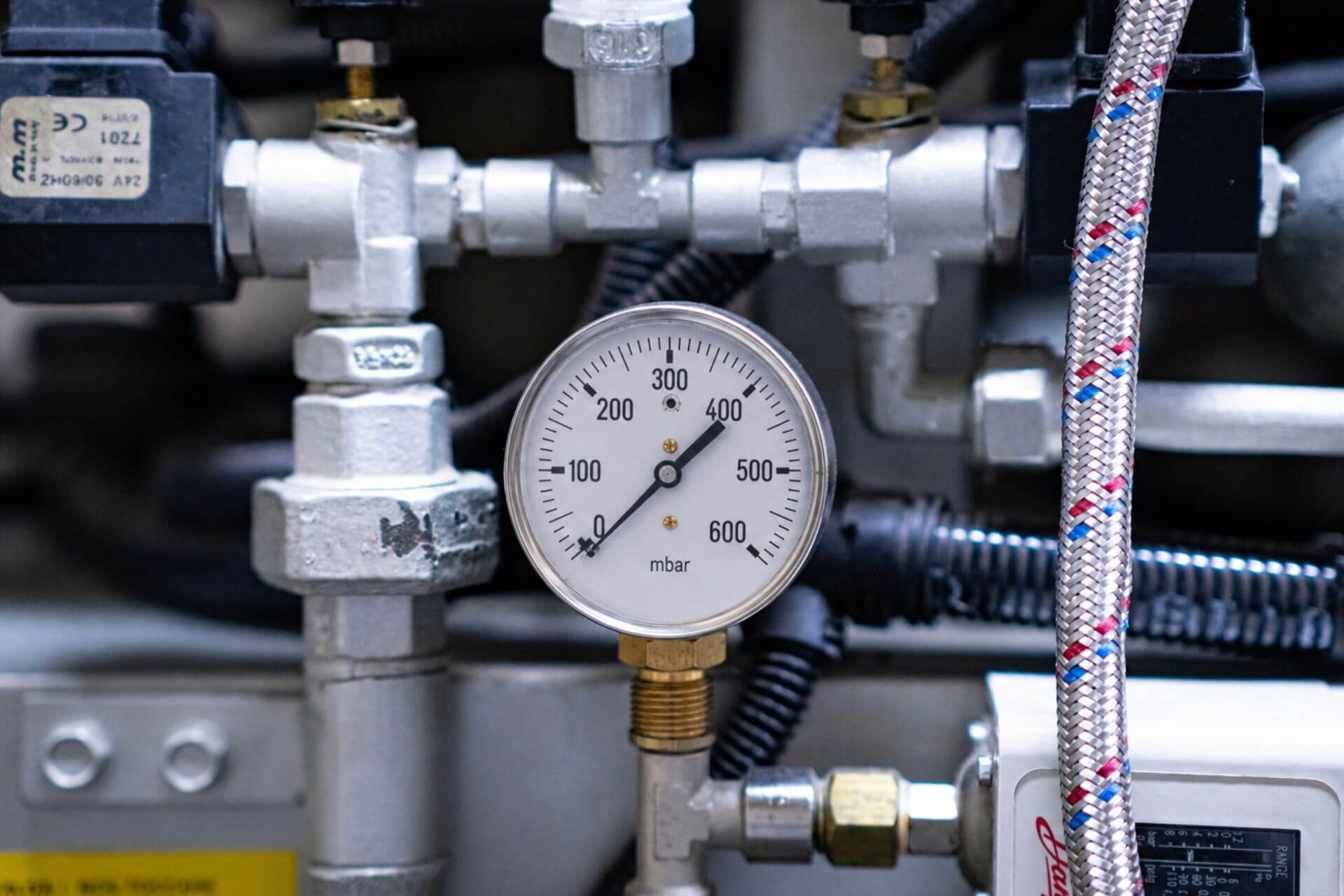
A gauge that's reading wrong doesn't usually announce itself. It just sits there, quietly reporting a number that's no longer true, until something down the line goes wrong for a reason nobody can immediately explain. Pressure gauge failure is rarely dramatic. It's a slow drift, a sticky needle, a dial nobody's looked at closely in months. This covers the actual failure modes worth knowing, what causes pressure gauge failure in the first place, how long a gauge should realistically last, and when the right call is replacement rather than another repair.
What Causes Pressure Gauge Failure?
Most pressure gauge failure comes down to a handful of causes repeating across different industries. Mechanical gauges work through a Bourdon tube or diaphragm that flexes under pressure and drives a needle round a dial, a mechanism we've covered in more detail in how does a pressure gauge work, and that movement is what eventually wears out. Vibration and pulsation are the biggest culprits. They fatigue the internal mechanism and work the needle loose over time, especially on gauges fitted directly to pumps or reciprocating equipment without any isolation. Overpressure spikes, even brief ones, can permanently deform the sensing element. Corrosive or dirty media attacks the internals from the inside. Temperature extremes, constant heat or repeated cycling, degrade seals and lubrication faster than a straightforward reading would suggest. None of this happens overnight. It's cumulative, which is exactly why a faulty pressure gauge often gets blamed on something else first.
Common Pressure Gauge Failure Modes
Some failure modes are obvious the moment you look at the gauge. Others take a second reading to catch. Here's what to look for.
Gauge Reading Higher or Lower Than Expected
What it is: the gauge shows a pressure that doesn't match what's actually in the system, confirmed against a second gauge or a calibration reference. This is the most common of all pressure gauge accuracy problems, and also the easiest to miss without something to check it against. Usually caused by a worn or fatigued Bourdon tube, zero drift after an overpressure event, or a gauge that was never calibrated correctly for the application. Fixed by recalibration if the drift is small and consistent, or replacement if the mechanism itself has degraded.
Needle Sticking or Return to Zero
What it is: the needle doesn't move smoothly, or doesn't return fully to zero once pressure is released. Usually caused by internal friction, a bent or fouled movement, or contamination inside the case. A pressure gauge needle stuck at one point rather than moving freely is one of the clearest signs the mechanism needs attention rather than the reading being trusted. Fixed by cleaning or servicing if caught early, otherwise replacement.
Erratic or Fluctuating Readings
What it is: the needle jumps around rather than settling on a steady value, even when system pressure is genuinely stable. Usually caused by pulsation or vibration reaching the gauge directly, particularly on pumps and compressors without any dampening. Fixed by fitting a glycerine filled gauge, which dampens exactly this kind of movement, or adding a snubber to the connection.
Gauge Fails to Register Pressure
What it is: the needle stays at zero regardless of actual system pressure. Usually caused by a blocked connection, a snapped Bourdon tube, or a completely seized mechanism. Sometimes what looks like failure is actually the wrong gauge for the job, a standard gauge won't register meaningfully on very low pressure applications where a low pressure capsule gauge is what's actually needed. Fixed by checking the connection for blockage first, then replacement if the internals have failed.
Damaged or Broken Pointer
What it is: the needle itself is bent, loose or missing entirely, usually obvious on inspection. Usually caused by physical impact, mishandling during installation, or a mechanism failure that's pushed the needle past its normal range. Fixed by replacement. A bent pointer isn't something worth trying to straighten back into accuracy.
Cracked, Damaged or Discoloured Dial
What it is: the dial face is cracked, fogged, yellowed or otherwise harder to read than it should be. Usually caused by UV exposure, heat, moisture getting past a worn seal, or straightforward physical damage. Fixed by replacement if the dial is affecting readability, since a gauge nobody can read accurately isn't doing its job regardless of what the mechanism underneath is still doing correctly.
Pressure Gauge Case or Connection Damage
What it is: the case is cracked, dented or corroded. Or the connection thread is damaged, worn, leaking. Physical knocks cause it. So does vibration, working a fitting loose over months rather than all at once. Corrosion does the rest, from the process media or just the environment around it. Fixed by replacement, almost always. The seal matters more than the dial here. Once that's compromised, the gauge can't be trusted, whatever the needle happens to be showing.
What Is the Lifespan of a Pressure Gauge?
There's no single number that applies across every application, but a general purpose gauge in light duty, low vibration service typically manages several years of reliable use. Gauges in harsh, corrosive, high vibration or high cycle environments can wear through in a fraction of that time. Pressure gauge lifespan depends far more on the operating conditions than on the gauge itself, a stainless steel industrial gauge in a demanding environment can still fail faster than a general purpose gauge treated gently. Calibration history matters too. A gauge that's never been checked against a reference can drift for a long time before anyone notices, which shortens its useful life even if the mechanism itself is still intact.
How Do You Prevent Pressure Gauge Failure?
Isolation and dampening deal with most of the common causes before they become a problem. A glycerine filled gauge absorbs vibration and pulsation at the source rather than letting it reach the mechanism directly, which is the single most effective fix for erratic readings on pumps and compressors, and we've gone into why that works in advantages of glycerine filled pressure gauges. Regular calibration catches drift before it becomes a faulty pressure gauge nobody trusts, and it's cheap insurance against the cost of acting on a wrong reading. Matching the gauge to the environment matters just as much, a stainless steel case for washdown or corrosive conditions, a diaphragm seal where the media itself would damage a standard Bourdon tube. None of this eliminates failure completely. It just pushes it much further down the line.
When Should a Pressure Gauge Be Replaced?
Replace it the moment the case or connection is compromised, since a seal failure means the reading can no longer be trusted regardless of what the dial shows. Replace it if calibration shows the gauge is out of tolerance and recalibration doesn't bring it back within range, worth reading why add calibration to your pressure gauges if you're not currently calibrating on a schedule. Replace it if the needle sticks, jumps or fails to return to zero, since that's a mechanism problem rather than a reading problem. The harder call is a gauge that still works but is approaching the end of its expected pressure gauge lifespan for its environment. In that case, replacing it on a schedule rather than waiting for a visible failure is usually the cheaper option, since the cost of a wrong reading is rarely just the price of the gauge.
Find the Right Replacement Gauge
If a gauge on your system is showing any of these failure modes, matching the replacement to the actual operating conditions matters more than matching it to what was originally fitted. Compare mechanical and digital pressure gauges against each other if you're not sure which reads more reliably for your application, or see the different types of pressure gauges available before you order. Browse the full pressure gauges range to see everything side by side.


Leave a comment
This site is protected by hCaptcha and the hCaptcha Privacy Policy and Terms of Service apply.