

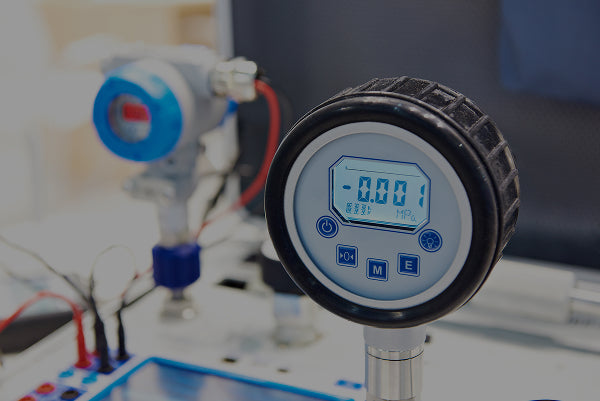


A water pressure gauge that's wrong for the job usually still works, for a while. It reads, the dial moves, nobody questions it until a reading drifts or a fitting corrodes from the inside out. Specifying the right one comes down to a handful of practical decisions rather than a single spec sheet. This covers what actually matters when selecting or replacing a water pressure gauge across water, utility and industrial systems.
Pressure Range and Overpressure Allowance
Size the range to the system, not the other way round. Normal operating pressure should sit in the middle of the scale rather than crowding full deflection, since a gauge working near its limit constantly loses accuracy and service life faster than one with headroom. Water systems with pump start-up spikes or hydraulic shock need that headroom more than most, since the peak pressure during a surge can run well above steady-state operating pressure even if it's brief.
Accuracy Requirements for Water Systems
Not every point on a water system needs the same accuracy class. A local indicator confirming a pump is running within its normal band doesn't need the same tolerance as a gauge feeding a compliance record. Where documentation matters more than the reading itself, a traceable calibration certificate supplied as standard is worth specifying for regardless of gauge type, and it's often the deciding factor for water systems under any kind of quality or regulatory oversight. Why calibration matters covers what a proper certificate should actually include before you take a supplier's word for it.
Gauge Size and Readability
Dial size is a readability decision, not a cosmetic one. A gauge mounted at eye level on a panel can run smaller than one fixed low on pipework or read from a distance across a plant room. Sizes from 40 mm through to 160 mm cover most water applications between them, so size can be matched to viewing distance rather than whatever happened to be fitted last time.
Back Entry or Bottom Entry Connection
Connection type is decided by the installation, not personal preference. A back entry pressure gauge suits panel-mounted and equipment-front installations, where the connection approaches from behind the dial and the gauge sits flush against a panel or machine fascia. A bottom entry pressure gauge suits upright installation directly on pipework, manifolds and gauge valves, with the dial facing the operator. Getting this wrong doesn't stop the gauge working, it just means an awkward retrofit, a bent stem, or a dial angled somewhere nobody can actually read it.
Materials and Corrosion Resistance
Water is rarely just water. Treated, hard, chlorinated or simply left standing in a wetted chamber for months, it will find whatever weakness exists in the wrong material. A general purpose pressure gauge is specified for air, water and oil applications and covers the bulk of routine water system monitoring, though wetted materials should always be confirmed against your specific water chemistry before ordering. Where corrosion resistance matters more, a stainless steel pressure gauge gives 316 stainless wetted parts on a 304 stainless case, built for washdown environments and long-term exposure to moisture that would eventually compromise a lesser material.
Dealing with Pump Vibration and Pulsation
Pumped water systems shake gauges in a way gravity-fed ones don't. A dry dial on a pump discharge line often shows a blurred or bouncing needle that's technically working but practically unreadable. A liquid filled pressure gauge solves this directly. A glycerine filled pressure gauge is built specifically for pumps, compressors and general machinery where vibration or pulsation would otherwise degrade the reading, and the glycerine fill also protects the internal movement, extending service life on equipment that runs continuously. The advantages of glycerine filled pressure gauges go into the mechanism in more detail.
When Is a Capsule Gauge Not the Right Choice?
Worth ruling out explicitly. Low pressure capsule gauges are built for mbar-range readings on dry gases and vacuum duties, not liquid systems. They're the right tool for very low pressure air or gas monitoring, and the wrong tool for a water pressure gauge application regardless of how low the operating pressure runs. If a water system genuinely operates at capsule-gauge pressures, that's a sign to check the application against the gauge type rather than force a fit.
Installation and Maintenance Considerations
Most water pressure gauge failures trace back to installation rather than the instrument itself, incorrect range selection, a connection under mechanical strain, or a gauge left in a position that traps sediment or air. A closer look at pressure gauge failure modes covers the specific ways this shows up in practice, and it's worth reading alongside a maintenance schedule rather than after a gauge has already failed. Weighing up build types more broadly before specifying? The guide to different types of pressure gauges is a useful companion to this one.
Specify the Right Gauge First Time
Match range, connection and material to the actual water system before ordering, and the gauge stops being something you think about again for years. The general purpose range covers most standard water applications. Stainless steel and glycerine filled options are there once corrosion resistance or pump vibration become part of the decision.


Leave a comment
This site is protected by hCaptcha and the hCaptcha Privacy Policy and Terms of Service apply.